Youth for Hunza: A New Chapter of Awareness, Responsibility, and Leadership
-
by
akmal.aly484
- No Comments on Youth for Hunza: A New Chapter of Awareness, Responsibility, and Leadership
In the heart of Hunza Valley, a quiet but powerful shift is taking place. Known for its rich culture, close-knit communities, and remarkable resilience, Hunza has long stood as a symbol of unity and endurance. Today, however, a new story is emerging, one that is being shaped not by tradition alone, but by the energy, awareness, and ambition of its youth.
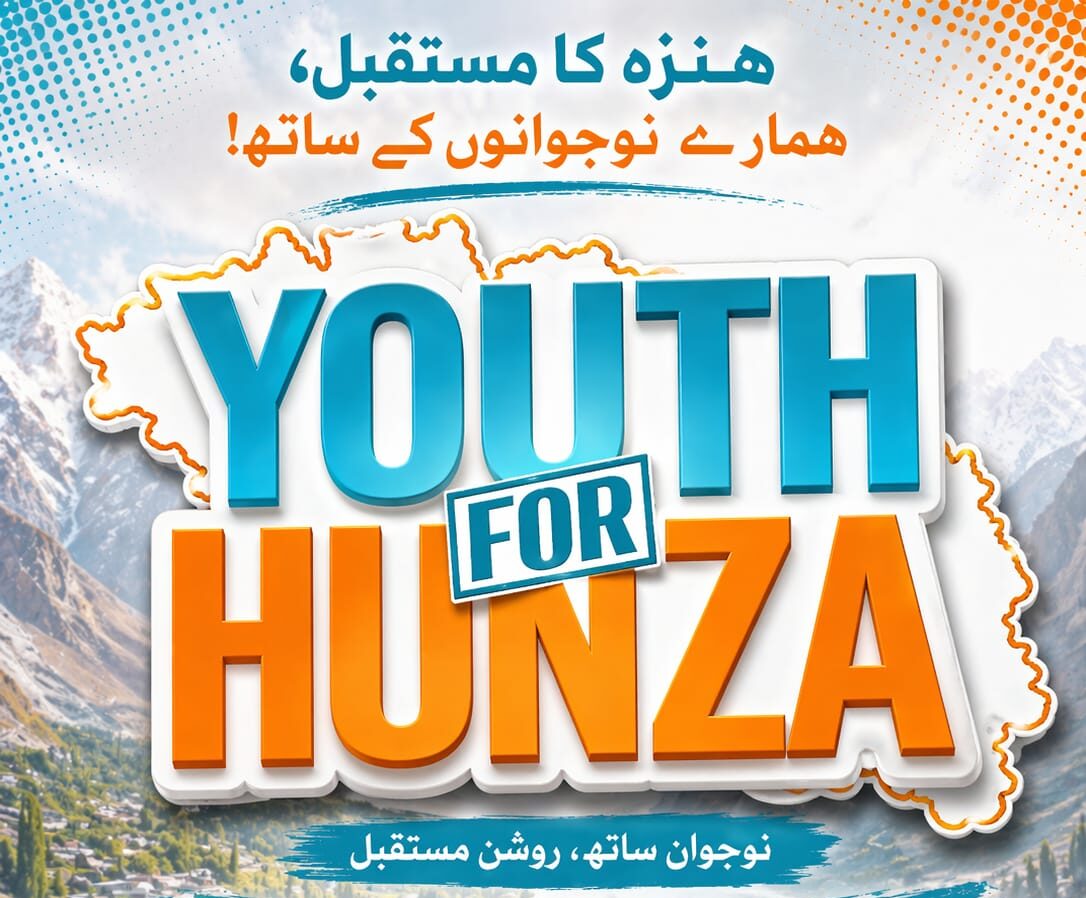
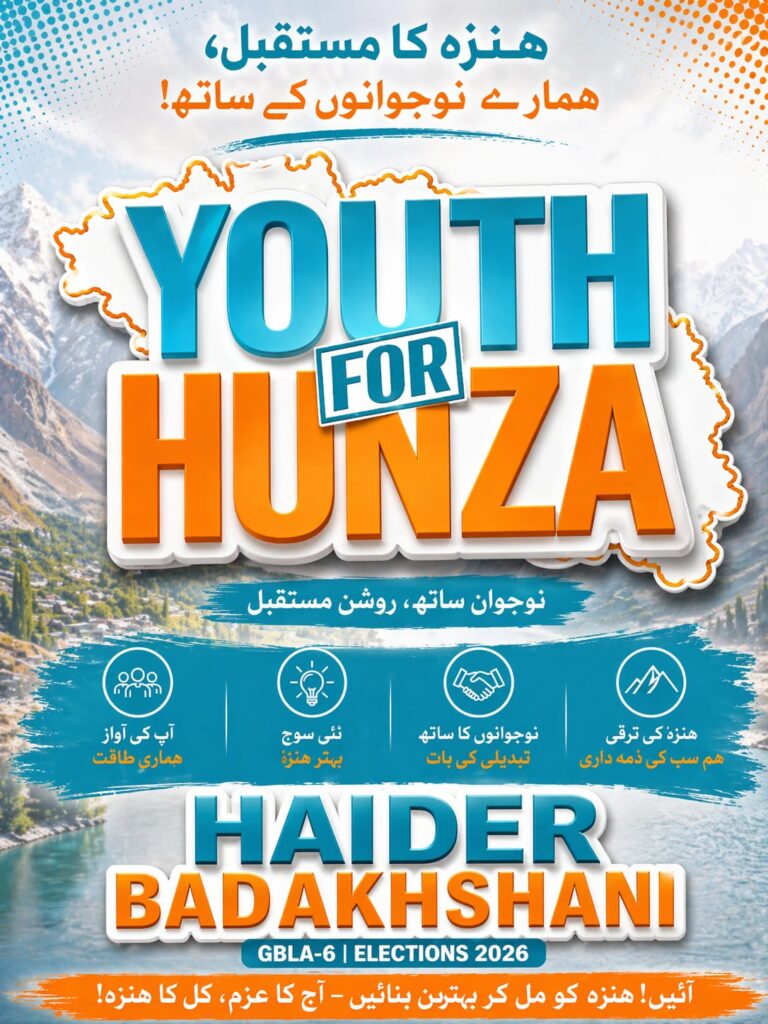
Youth for Hunza is not a formal organization, nor is it a structured political movement. It is something more organic, a shared vision, a collective mindset, and a growing sense of responsibility among young individuals who are stepping forward to play an active role in shaping the future of their region.
From Silence to Participation
For many years, young people in Hunza remained on the margins of decision-making. Whether due to limited opportunities, lack of accessible platforms, or a general disconnect from governance, their voices were often unheard. Politics and community leadership were seen as distant spaces, rarely open to youth participation.
That reality is now changing.
Today’s youth are more informed, more connected, and more willing to engage than ever before. They are participating in discussions, questioning existing systems, raising awareness about local issues, and actively contributing to their communities. What was once silence is now evolving into meaningful participation.
What’s Driving This Change
This transformation is not accidental. It is the result of several powerful forces coming together.
Education has played a central role. More young people now have access to higher learning, equipping them with knowledge, critical thinking skills, and a broader understanding of the world. Alongside this, digital exposure has opened new doors. Social media, online platforms, and global connectivity have allowed youth to learn, express, and organize in ways that were not possible before.
More importantly, there is a growing awareness of civic rights and responsibilities. Young individuals are beginning to understand that their role is not limited to observation, they are stakeholders in the future of Hunza.
The Power of Educated and Skilled Youth
In a rapidly changing world, the challenges faced by regions like Hunza are becoming increasingly complex.
Climate change is no longer a distant concern, it is a daily reality. Economic development requires innovation and adaptability. Governance demands transparency, efficiency, and forward-thinking leadership. Digital transformation is reshaping how communities function and grow.
In this context, the role of youth becomes critical.
- Educated youth bring knowledge, analytical thinking, and informed decision-making
- Skilled youth contribute practical solutions, innovation, and execution
Together, they form a powerful force capable of driving sustainable development. They are not just participants in change, they are potential leaders of it.
From Awareness to Action
What makes this shift truly significant is that it is not limited to ideas, it is translating into action.
Across Hunza, young people are:
- Leading climate awareness initiatives and clean-up drives
- Advocating for better education and learning opportunities
- Promoting social harmony and community collaboration
- Using digital platforms to raise issues and amplify local voices
They are no longer passive observers. They are becoming contributors, organizers, and leaders.
The Need for Meaningful Inclusion
Despite this progress, one important challenge remains, recognition.
Youth participation should not be symbolic. It must be real, meaningful, and impactful. Young people must not only be heard, they must be trusted, empowered, and given actual opportunities to lead.
This includes:
- Inclusion in decision-making spaces
- Access to leadership roles
- Platforms to present ideas and solutions
- Support systems that nurture their growth
Without this, the momentum risks slowing down. With it, the impact can be transformative.
A Call for Evolving Leadership
A key part of this emerging narrative is the growing call for political reform.
There is an increasing realization that traditional leadership structures, while valuable, are not always equipped to handle modern challenges. The world is changing, and leadership must evolve with it.
Youth for Hunza reflects a simple but powerful belief:
Leadership should be dynamic, informed, and responsive to the needs of the time.
This does not mean replacing one group with another. It means creating space, space for educated, skilled, and visionary young individuals to step into roles where they can contribute meaningfully.
It is about progression, not exclusion.
Balancing Tradition and Change
Hunza’s strength has always been its ability to preserve its values while adapting to change. This balance is more important now than ever.
Empowering youth does not mean losing identity. It means strengthening it.
When young people are given the opportunity to lead, they bring:
- Energy and motivation
- Innovation and fresh perspectives
- Accountability and transparency
- A forward-looking vision
These qualities, combined with the wisdom of existing leadership, can create a powerful foundation for the future.
A Future Built by Its People
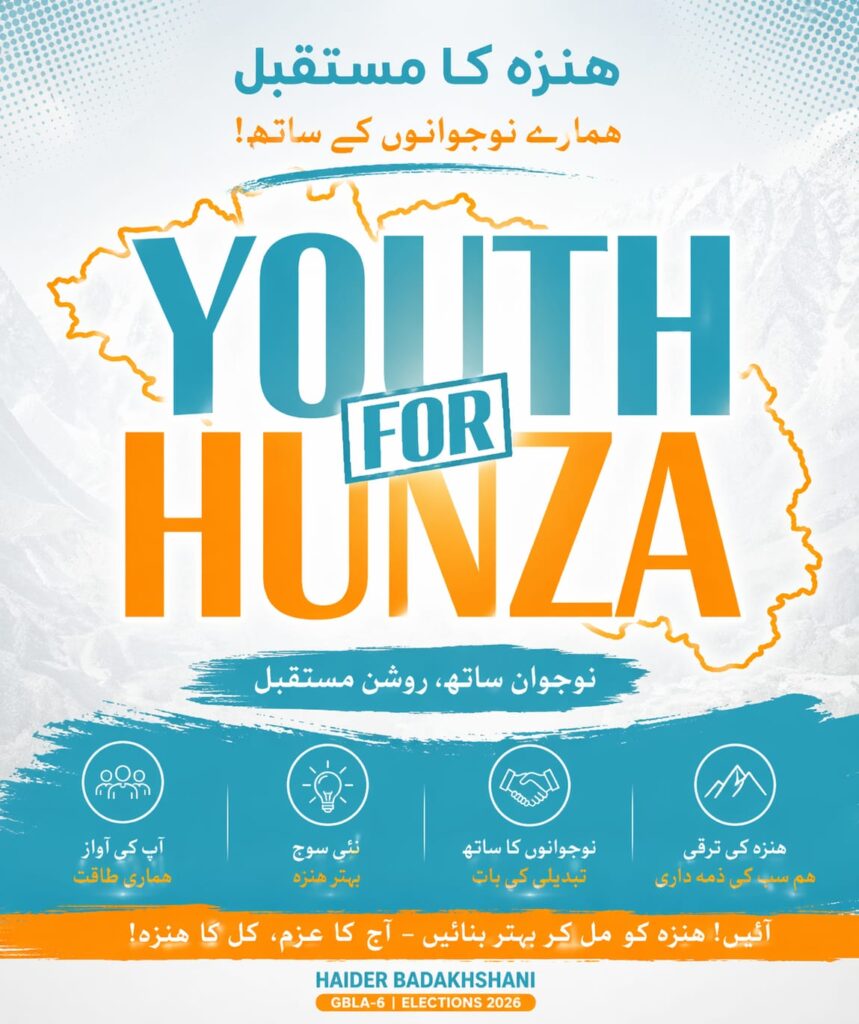
At its core, Youth for Hunza represents hope.
Hope for a future where leadership is inclusive.
Hope for a society where every voice matters.
Hope for a community that values capability, responsibility, and vision.
Most importantly, it represents the belief that the future of Hunza should be shaped by those who will live it.
Follow the Campaign
Every policy position, every village workshop, and every development plan identified through community consultation will be published openly at www.haiderforhunza.com. To follow the campaign, join the conversation on Facebook, Instagram, YouTube, and WhatsApp. To volunteer or get involved, visit the website or contact the campaign team directly.
The future of Hunza is being written digitally, transparently, and without a single printed page.
Haider Badakhshani | Candidate, GBA-06 Hunza Gilgit-Baltistan Legislative Assembly Elections 2026 People • Rights • Development • Environment • Future